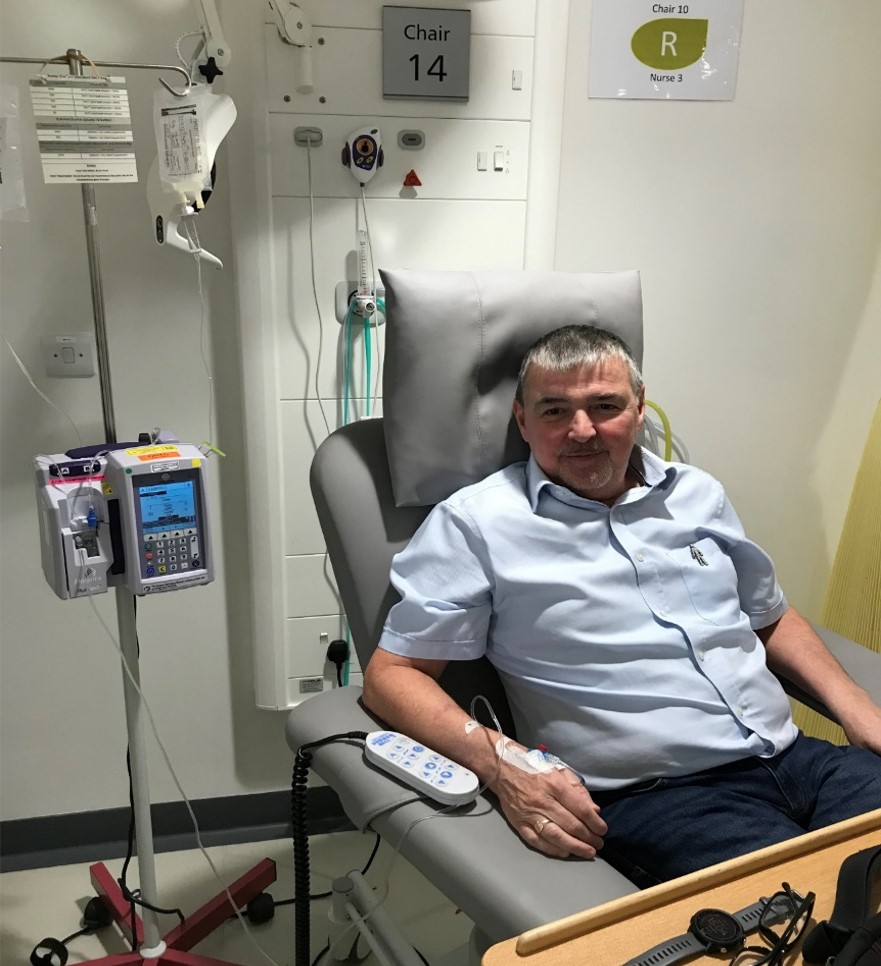
I’m very much in favour of screening for prostate cancer, as you’d expect given that I was diagnosed with the incurable variety at age 60 and given a worst-case prognosis of two years.
Being told that you’ve got cancer is devastating, being told it was incurable is indescribable. Then finding out that I’d probably had the cancer developing for 10 years, because it had spread so far, came as a real shock that turned to anger when I found out that I’d been entitled to a simple PSA blood test from age 50, that would almost certainly have detected my cancer early when it was curable if I’d had that test annually, but I knew nothing about my right to the test.
Why don’t we already have a screening programme? In 2012 the US Preventive Task Force concluded that screening did more harm than good. In a nutshell, men were being told that they had low grade prostate cancer and then going on to have trans rectal biopsies, risking sepsis and death, before having radical treatments, including prostatectomies or radiotherapy, that they didn’t need but led to harms including incontinence and impotence.
This is entirely anecdotal and unscientific, but I know quite a few men who’ve ended up with serious side effects from radical treatment that may not have been necessary but was the norm when they were treated, who are still happy that they got rid of the cancer and yes, I understand that being rid of the cancer is emotive and yes, I know that some men do have treatment regret because they’ve been harmed.
The USPTF recommendations left us with a situation where men in the high risk groups, black men and men with a family history aged over 45 and other men over 50, were entitled to a test on request but needed to be counselled by a GP on the pro’s and con’s of being tested thus were being said to be making an informed decision to be tested. The major issues with this are that, firstly men needed to be aware of their right to be tested and secondly some GP’s flatly refused to follow their guidelines on testing asymptomatic men. This of course created significant health care inequalities as men, for example in areas of socioeconomic deprivation, weren’t aware of their right and even for those who were aware, some GP’s acted as a barrier to testing thus denying men the opportunity to make an informed decision.
Health care inequalities, including not having the knowledge about the need to get tested or being refused a test, has resulted in Scotland having rates of metastatic incurable diagnoses as high as 35% of all men diagnosed, nearly three times the rate in other areas of the UK. This is not acceptable in any way.
Why is screening now being re-considered? Improvements in the diagnostic pathway have substantially reduced harms. Historically a man with a high PSA reading would have gone straight to trans rectal biopsy and then potentially radical treatments that might have caused harm. The current improved pathway leads to men with a high PSA having a multi parametric MRI scan giving clinicians a much better idea what is going on in the prostate. Then men who had suspect areas in the prostate would have a trans perineal biopsy with lower risk of infection. Men ultimately diagnosed with low grade, low risk prostate cancer are encouraged to avoid radical treatment and go on to active surveillance where they are regularly monitored to assess the progress, or lack of, of their cancer. Inevitably, some men find this a real challenge and the urge to be rid of the cancer is a strong one.
Does this mean that harms have been reduced enough to justify a screening programme? Regrettably not. The call is for even greater evidence of reduction of harm before population screening will be considered and that evidence is expected to be delivered by the TRANSFORM trial which is the biggest ever screening trial and will cost £42m. We may see some interim output from TRANSFORM in 2029, given that the trial hasn’t started recruiting yet, but we may have to wait 10-15 years for full confirmation.
Why is that an issue? In the UK alone 12,000 men are dying every year of prostate cancer. By 2029 another 36,000 lives will have been lost. If we wait 10-15 years that equates to 120-180,000 lives lost and that isn’t acceptable. Each of those lives is a family ripped apart. A Husband, Father, Grandad, Brother lost.
Is there any evidence now to support some form of screening? The National Prostate Cancer Audit (NPCA) suggested that 7% of men with low grade prostate cancer went on to have radical treatment and this seems supportive of a relatively low percentage of men being harmed. Alarmingly the NPCA also suggested that far too many men with metastatic prostate cancer are receiving substandard treatment thus potentially being significantly harmed!
A European wide screening study, The European Randomized Study of Screening for Prostate Cancer (ERSPC) recently reported the results of 23 years of studying screening with a screening arm and a none screening arm and a total of over 162,000 participants. The headlines are a 13% reduction in prostate cancer mortality in the screening group, one death prevented for every 456 men invited for screening, risk of advanced cancer down by 34%, benefit continues to rise over time as the harm/benefit ratio improves.
Some critics say that, in the ERSPC trial, whilst the screening group showed a significant reduction in prostate cancer mortality (the original aim of the study) there was no statistically significant difference in all-cause mortality between the screening and control groups. This means screening successfully lowered deaths from prostate cancer but did not significantly impact the total number of deaths from all causes combined, such as heart disease, stroke, or other cancers. Is that a surprise though given that men recruited to the study were aged 50-70? A 70 year old recruited 23 years would now be 93 if still alive!
The head of that trial said “Working in population based screening, I like PSA a lot. It’s cheap, it’s objective, it’s fully developed. It is a perfect first screening test. It can be applied without too much harm. People are not afraid to get it. So, for me, it is a very nice test”
A USA based Urologic Oncologist and Researcher focussed on prostate cancer said pretty much the same. Talking about ERSPC he said “PSA is cheap, non invasive and very sensitive. The decision to biopsy is different now than 23 years ago. Use of AS is much higher now, a cancer diagnosis doesn’t equate to treatment. We start screening earlier and stop screening earlier now. We have better planning tools, greater use of robotics and developing focal therapies. People fail to realise that it wasn’t until 15 years ago we started to develop an effective way to treat metastatic prostate cancer. If ERSPC was done now it would demonstrate even less harm and at least similar benefit.”
His next comment was rather controversial as he said “Is it truly reasonable to conduct massive RCT’s when the answer is right in front of us“
He’s clearly an advocate for using PSA testing with a risk based approach but there are many people who disagree strongly with him and indeed would be said to be poles apart.
Is this enough for a population wide screening programme? This is a decision that is currently being considered by the National Screening Committee (NSC) and a decision is expected by the end of 2025. On balance it seems unlikely that the NSC will recommend a full screening programme, particularly given that the TRANSFORM trial is such a huge priority.
Are there any other alternatives? Prostate Cancer Research (PCR) and Prostate Cancer UK (PCUK) have been calling for a risk based screening programme for men at greatest risk, black men over 45 who have twice the risk of white men, men over 45 with a family history who have 2.5 times the risk of other men and men with the BRCA gene mutation. I think that this is a possibility as it would seem politically expedient given that the All Party Parliamentary Group on Prostate Cancer and Wes Streeting are supportive and the evidence, in my humble opinion has swung in favour of this direction of travel. PCR’s report “Prostate Cancer Screening: The Impact on the NHS” suggests that a limited cohort screening programme would cost c. £25m, 0.01% of the NHS budget, £18 per man. This compares favourably with other screening programmes and the benefits would certainly generate a return on investment and save lives.
In my 8.5 years of living with advanced prostate cancer I’ve spoken extensively about the reality of the harm of late diagnosis and it’s always seemed to me to be totally overlooked when considering the harms Vs the benefits of a screening programme. I wrote about this for Tackle Prostate Cancer in this article https://tackleprostate.org/harms-of-late-prostate-cancer-diagnosis/
Conclusion – many people believe that the evidence now supports risk based screening but that it’s not right to move to population screening yet. Testing those at greatest risk is an important start without significant cost and without adding significant pressure on the NHS. Hopefully the NSC will agree and then TRANSFORM will produce evidence quickly that ensures no man is left behind. Targeted screening wouldn’t have led to my cancer being diagnosed earlier so we also need to think about how people like me would be diagnosed earlier and a good start would be making sure that some GP’s aren’t barriers to informed choice testing and even more importantly changing GP guidelines to encourage them to proactively engage with asymptomatic men on testing which they are currently advised against doing.


🙌. Fantastic work Tony keeping this conversation/ discussion going.
LikeLike